Posted on

Changes to ‘Key Events’ in the LCCP – 19 March 2026

The Gambling Commission have made changes to the Licence Conditions and Code of Practice (LCCP) condition 15.2.1, in relation to the reporting of ‘Key Events’ that will come into force today, 19 March 2026:

Paragraphs 1, 2 & 3 have been expanded and now read as follows: 

Condition 15.2.1, Paragraph 1 (new text added to raise the reporting threshold for ‘operator status’ and ‘relevant persons and positions’ from 3 percent to 5 percent)

1. Any of the following applying to a licensee, any person holding a key position for a licensee, a group company or a shareholder or member of the licensee (holding 5% or more of the issued share capital of the licensee or its holding company):

a. presenting of a petition for winding up

b. making of a winding up order

c. entering into administration or receivership

d. bankruptcy (applying to individuals only)

e. sequestration (applicable in Scotland), or

f. an individual voluntary arrangement.

Applies to: All operating licences.

Updated Licence Condition 15.2.1, Paragraph 2 (new text added to expand the application of ‘relevant persons’ to include entities without share capital ((the GC have excluded society lottery licensees from this change))

2. In the case of licensees who are companies, bodies corporate, or other legal entities (but excluding society lottery licensees where stated), the name and address of any person or entity who (whether or not already a shareholder):

a. becomes a shareholder holding 5% or more of the issued share capital of the licensee or its holding company; or

b. controls 5% or more of the voting rights of the licensee or its holding company, excluding society lottery licensees; or

c. is entitled to 5% or more of the dividends or profits of the licensee, excluding society lottery licensees.

Applies to: All operating licences excluding society lottery licensees where stated.

Condition 15.2.1, Paragraph 3 (new text added to ensure that all relevant loans are reported, whether or not agreements are in writing)

3. The taking of any loan by the licensee, or by a group company who then makes an equivalent loan to the licensee, from any person not authorised by the Financial Conduct Authority: a copy of the loan agreement, if any, must be supplied.

Applies to: All operating licences.

In addition, an equivalent amendment will also take effect in the Licensing, Compliance and Enforcement Policy Statement under the Gambling Act 2005 to raise the threshold of shareholders to be listed from 3 percent to 5 percent under the section about Licensing (under the heading, ‘Identity and Ownership’).


Should you wish to discuss any element of the above, please contact Chris at chris@woodswhur.co.uk or your normal Woods Whur contact.

Posted on

Gambling Commission Spring Conference – Facing the Future Road Map for Gambling Research and Regulation 

  1. Welcome – Katherine Diamond (Chief Counsel for the Gambling Commission)
  2. Opening Remarks – Sarah Gardner (Acting Chief Executive of the Gambling Commission)
  3. David Halpern CBE – Key Note Speaker – founding director of the Behavioural Insights Team
    • David made several interesting points about decision making based on choices offered. For example, lowering the maximum deposit limits as the maximum option acts as an anchor – the higher the ‘highest option’ the higher people set their limits. Allowing individuals to type their own deposit limit also lead to lower limits set by customers
    • He also discussed the problems surrounding symmetry of friction within a customer journey- you can dial it up (withdrawing deposit, cancelling accounts) or down (joining, upping thresholds), depending on the aim which can be dangerous.
    • David put forward a proposal of enforced breaks for online operators 3 or 6 seconds enforced. Similar to an app called 1 sec that you can download to your phone. Overall a very interesting key note with some unusual observations which can be easily applied to the industry.
  4. Building a Shared Data Future under the Statutory Gambling Levy
    • Facilitator – Ben Haden (Director of Research and Statistics at the GC)
    • Panel – Andy Boyd (Director of UK Longitudinal Linkage Collaboration), Sam McGreggor (Deputy Director of Smart Data Research UK), James Skruton (SRS Head of Data and Environment for the Office of National Statistics) (Partner of ADI UK), Sukriti Verma (the Head of Analysis for Sport and Gambling for DCMS), Dr David Zendal (Director of Smart Data Donation Services)
    • Nothing of much note for the industry within this panel, the key drivers of the conversation were the research bodies discussing how important data sets are and making the case for operators sharing all of their customer data with the research teams to help with evidence backed policy setting. It appears the research bodies are trying to use the statutory levy to access this data. When asked whether such data could in turn be made available to an individual from the industry (as an accredited researcher), the research bodies were extremely hesitant. Reading between the lines – this would be a no.
    • UKRI seem to be in a difficult position regarding the levy due to a reluctance to liaise directly with operators. 
  5. Gambling related harm: approaches to measurements and insights from underrepresented groups (Evidence Theme 3: Gambling-related harm and vulnerability)
    • Facilitator: Sue Cox (Member, LEAP)
    • Presenters: Dr Naomi Muggleton (Associate Professor Warwick), James Close (Associate Professor in Medicine and Psychology at Peninsula Medical School), Dr Mercy Denedo (Associate Professor Accounting, Durham), Dr Liz Riley (Head of Research and Evaluation Betknowmore)
    • This sadly related to female victims of domestic abuse, that was linked to Gambling, as well as other issues such as alcohol abuse. They were linking domestic abuse with Gambling addiction, both of partners having spent all family money and indeed women turning to Gambling as both a means to get away from the difficulties of life, as well as seeing it as an opportunity to make money. It was not really of benefit for our work, as these were individual cases per se. It was used just to highlight the issue that it is not just the gambler that is affected.
  6. Illegal Gambling – Developing the Evidence Base (Evidence Scheme 6- Illegal Gambling and Crime)
    • Facilitator – Ian Angus (Director of Policy at Gambling Commission)
    • Presenters – Tim Livesley (Head of Data Innovation Hub at the Gambling Commission), Tom Smith (Data Scientist for the Gambling Commission)
    • Panel – Jonathan Heath (Head of Gambling Duties Policy Team at HMRC), Peter Eerligh, Helen Walton (Chief Commercial Officer and Founder of G Gaming)
    • GC and HMRC are working together to try and negotiate where the illegal market sits, including navigating any potential ‘pinch points’ (advertising, social media, payment providers etc) to try and quell the spread of illegal sites
    • The GC’s data on the illegal gambling markets do not include any access through a VPN, which means that they have lowered/levelled off their figures based on their own decisions. Furthermore, all of their data is based off one metric, so they are aware it is not perfect. The Online Safety Act resulted in the doubling of VPN usage back in July/August last year. There was a slight decline towards the end of the period, but it is still a 40% increase on before.
    • There is a clear distinction within the illegal gambling conversation between an unlicensed operator and an operator licensed in another jurisdiction. An example was given of Stake.com who are not using malicious advertising techniques but still received a huge amount of traction due to the level of customer service they offer. This is partly due to the low friction for customers, but also the higher RTP and bonus structures.
    • Questions were asked about whether the plan to disrupt illegal markets by targeting suppliers would be effective, as any non-UK centric suppliers would simply switch off the UK. Overall a very interesting conversation which highlighted the nuances of this area.
  7. Gambling, AI and the Consumer Experience – (Evidence Theme 5  Product, Characteristics and Risk)
    • Facilitator – Brad Enright (Director of Strategy at the Gambling Commission) (not AI expert)
    • Panel – Sandy Chidley (Evidence Lead for Gambling and Lotteries for DCMS) (not AI expert), Leon Green (Member of the Lived Experience Advisory Panel) (not AI Expert) and Daphne Tsatsoulis (Head of Data Science at Flutter) (AI Expert)
    • AI has been used to personalise customers experiences for many years now, and there were discussions around the boundary between helpful suggestions versus predatory tactics. Using AI to flag worrying customer behaviour and then interact can be helpful, but it must be explainable and transparent. For this reason, Gen AI has actually not got very far for customer facing activity, although some operators are using it to provide summaries of a customer’s profile/journey to help inform interactions.
    • Concerns about chatbots were raised, particularly the fact they can’t pick up on emotions and shouldn’t be ‘left alone’ to liaise directly with customers.
    • Safety by design and good collaboration should at the heart of gambling innovation. For example, a good use of AI could be summaries of Terms and Conditions to customers to help operators ensure they are fair and open.
    • Talk of ‘Safety profiles’, in which operators let customers see their safety profiles and any concerns. This seems short sighted – and gives customers the knowledge of how to avoid being detected.
  8. Growing up online: children and young people’s digital footprints and pathways to gambling (Evidence Theme 1: Early gambling experiences and gateway products)
    • Facilitator: Matt Losing (Member, LEAP)
    • Presenters: Sumita Deb (Senior Online Audience Analyst OffCom), George Webster (Director Humankind Research)
    • Panel: Donna Bateman (Strategy and Engagement Manager, GC), Bal Kaur (Member LEAP)
    • This concentrated on a study from 12 to 17-year-olds. However, Gambling was not the focus and just looked at how addictive social media and online content could be. Interestingly, YouTube was deemed to be less harmful than Snapchat and Instagram, for example.
    • Focus from a separate speaker, linked loot boxes to Gambling in later life. There was also a strong link with football, with people taking social benefit from placing a bet on teams as it was part of their Saturday social and conversation with other friends.
  9. Engagement with Purpose – how operator practices impact consumer experiences. (Evidence theme 4 – The Impact of Operator Practices)
    • Facilitator – Kirsty Caldwell (Interim Chair of the Industry Forum)
    • Presenter – Dr Maris Catania (Director of Fair Sustainability for Leo Vegas), Nigel Chamberlain (Operations Director for Retail Support Entain), Sue Wade (Head of Gambling Policy at Flutter)
    • Customer research is seen as vital to ensure genuine engagement, a current problem area for most operators. Emails are seen as day to day and non-urgent (and often deleted), but text or push notifications are seen as more urgent or event lead. Over messaging makes people check out and leave to go to other operators and personalisation is more important than volume. Control and boundaries are seen as non-negotiable, operators have to earn the right and build the trust to be able to have the conversations that you need to have for customer protection. Phone calls tend not to work for younger generations (who do not answer the phone), but voice notes may be explored as a better option
    • Several operators have seen a big take up of safer gambling tools when they have changed the way they interact with their customers. For example emailing a survey once a year received 1% response rate, whereas an in-product version produced 17% responses.  Timing has also helped for safer gambling interactions – when a customer is actually on the site (and consequently in the frame of mind to think about gambling) is the best time.
    • Customers can also be incentivised to use safer gambling tools, for example a campaign was run with Pure Gym where if you signed up to the safer gambling tools, you got a free gym pass. This doubled the use of a profit and loss campaign from 12.6% to 21.5% (compared to just using a standard SG prompt). Wellness and safety connections are viewed as very positive, generally agreed that free spins or similar in exchange for signing up to SG tools would not be helpful (or appropriate)
    • Some CI/SG suggestions:
      • Providing customers with a clock of how much time they are spending on a siteIndividualised outcomes from interactionsTailored approaches to interactions based on thresholds/triggersEnhanced staff training for those dealing with interactionsEvaluate effectiveness of CI’s by comparing pre and post CI behaviour 
  10. Closing Remarks
    • Closing remarks from Charles Counsell (Interim Chair of Gambling Commission) and Tim Miller (Director of Research and Policy at the Gambling Commission)
    • The research posters generally all had central anti-gambling themes:
      • Proximity to gambling shops and gambling harms
      • Effects of Interventional public health laws and regulations intended to reduce gambling-related harms: a narrative systematic review
      • Matched Betting: Risk-free Opportunity or emerging source of gambling harm?
      • Gambling behaviour, disordered gambling and commodities
      • Using complex system dynamics to analyse the relationship between contemporary gambling policy and big data
      • Consent Banners, Dark Patterns and GDPR infringements in online gambling: evidence from a systematic audit and online experiment
    • Tim Miller – closed with statements including we “have to get comfortable with nuance” because that’s what the data and evidence shows, and “Uncertainty can never be irradicated, we have to find ways to live with it”.
Posted on

World Cup 2026: Government confirms plans to relax licensing hours across the UK

The government has announced plans to relax licensing hours for select Home Nation matches in anticipation of the FIFA Men’s World Cup 2026 this summer. This follows shortly after the Home Office held a consultation on a proposed Licensing Hours Order under Section 172 of the Licensing Act 2003 at the end of last year. Under Section 172, the Home Secretary may extend permitted hours for events of exceptional national significance. Previous Orders were made for the 2010 and 2014 World Cups, with the latter offering the largest extensions due to the Brazil time difference.


The recent press release, published 27 January 2026, broadens the scope of the suggested relaxation as part of a larger support package for the hospitality sector ahead of the tournament.


England & Wales: Proposed licensing hours order and Government update

The Home Office’s original consultation proposed a national relaxation of licensing hours for the semi‑finals and final, provided a Home Nation (England, Wales, Scotland or Northern Ireland) reaches those stages. The consultation closed on 15 January 2026 and is currently under review.

A new Government press release confirms that the proposed relaxation will now also apply to quarter‑final matches. The extension will allow pubs in England and Wales to open later without applying for a Temporary Event Notice for the following:

  • Premises may remain open until 1am for any quarter‑final, semi‑final or the final if the match starts at or before 9pm BST.
  • Premises may remain open until 2am for any quarter‑final starting at 10pm BST.

However, matches beginning after 10pm BST will not benefit from this extension so premises will need to rely on existing permissions or apply for a TEN if they wish to open later.

For all other games, operators will still need to rely on existing licence hours or submit a TEN where later opening times are required. The Government has confirmed that it is exploring options to extend opening hours for additional Home Nation matches, though no further details have yet been published.

Please see the following link to the January 2026 Press release: https://www.gov.uk/government/news/government-announces-support-package-that-backs-british-pubs


Scotland: Local licensing board extensions

Scotland operates under a separate licensing framework. Section 67 of the Licensing (Scotland) Act 2005 allows Licensing Boards to grant general extensions for events of local or national significance.

Several boards have already announced their positions:

  • Aberdeen City Licensing Board has approved a blanket extension to 03:00 for Scotland matches, with additional time permitted if a match runs beyond that.
  • East Ayrshire Licensing Board has indicated it is likely to adopt a similar approach.
  • Glasgow City licencing board has also approved an extension lasting until 30 minutes after the final whistle for all matches.
  • City of Edinburgh Licensing Board is consulting on a general extension for matches falling outside normal licensed hours. The consultation closed on 9 February 2026, with a decision expected on 23 February. Edinburgh adopted a similar extension for the 2014 World Cup.

Approaches may vary across Scotland, so operators should monitor local Board decisions closely.


What next?

Although the final Licensing Hours Order has not yet been published, operators can begin preparing by reviewing existing licence hours and identifying the matches that may still require TENs. It would also benefit operators to begin planning staff, security and dispersal arrangements for extended hours.

We will continue to monitor Government developments and provide further updates as soon as information becomes available.

Posted on

BARCELONA AND BEYOND–Gambling Act Compliance

What a start to 2026. Andy, Chris, Amanda and I kick started the year at ICE in Barcelona and we didn’t stop. I feel that Barcelona has really breathed life into ICE and our relationship with iGB Executive is really bearing fruits. It is a fantastic opportunity for networking. On the first night Chris and I took part in a networking Paella cooking competition in an old restaurant in the Gothic Quarter of Barcelona. This was a great opportunity to meet new people and the vino blanco helped to get people chatting. On the last night we hosted several clients for drinks and food, where? What says Barcelona more than an Irish bar….of course.

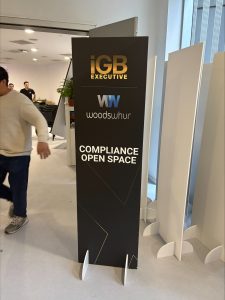
On the second morning we hosted a “Compliance Open Space” in the iGB Executive Lounge. This was a great concept. We each took a table of 10 people and asked all to write on a post it note the issues they would like to discuss in the session. We had operators from all over the world and the three areas chosen to look at closely in the 2 hour session were:

  • Operators relationship with the Regulator–what are the levels of compliance required.
  • AI and how it will factor into the gambling market from the operator and the regulator perspective.
  • Crypto currencies. How are they viewed from different regulator perspectives.

We teased out some fantastic debate and a report is currently being drafted which we will circulate.

What we did conclude was that the UKGC seems to be ahead of the curve on AML KYC and customer interaction requirements to avoid vulnerable people being affected by problem gambling. In fact many international operators were surprised to learn of the UKGC requirements.

As a result of this I thought it was worthwhile refreshing our minds on Regulatory Compliance in the UK.

Our session reconfirmed that the UK gambling market is one of the most tightly regulated in the world. Compliance with the UK Gambling Act is not just a legal obligation—it is central to maintaining a licence, protecting consumers, and preserving brand reputation.

  1. Legislative Framework

The foundation of UK gambling regulation is the Gambling Act 2005, which established a comprehensive licensing and regulatory system. The Act has been updated through subsequent legislation and regulatory reforms, including the Gambling (Licensing and Advertising) Act 2014. We will always follow these amendments as the legislation changes and advise clients in advance of them.

Oversight and enforcement are carried out by the UK Gambling Commission (UKGC), which issues licences, sets regulatory standards, and imposes sanctions for non-compliance. From a personal perspective I have seen a considerable swing to the regulatory and enforcement roles of the Commission in recent times.

  1. The Three Licensing Objectives

Under the Gambling Act 2005, all licensed operators must uphold three core objectives:

  • Preventing gambling from being a source of crime or disorder
  • Ensuring gambling is conducted fairly and openly
  • Protecting children and vulnerable persons from harm or exploitation

Every compliance requirement ultimately ties back to one or more of these objectives. They should always be a prime focus to operators and the Regulator.

  1. Licensing Requirements

Operators offering gambling services to customers in Great Britain must obtain the appropriate operating licence from the UKGC. The process of applying can be time consuming and the level of detail required is high. Managing client’s expectations through this process is often difficult.

Personal management licences (PMLs) are also required for key personnel in specified management roles.

Failure to obtain the correct licence before offering services to UK consumers is a criminal offense.

  1. Licence Conditions and Codes of Practice (LCCP)

The UKGC enforces compliance through the Licence Conditions and Codes of Practice (LCCP). It is well worth regularly assessing your operating systems to check whether you are in compliance with the LCCP and if needed bring in external consultants to audit. It is much better to exhibit good compliance than risk regulatory enforcement action.

These contain:

  • Social responsibility requirements
  • Anti-money laundering (AML) obligations
  • Customer interaction mandates
  • Advertising standards
  • Reporting and key event notifications

Non-compliance can result in financial penalties, licence suspension, or revocation.

  1. Anti-Money Laundering (AML) and Counter-Terrorist Financing (CTF)

Operators must comply with UK AML legislation and conduct risk-based customer due diligence (CDD). Core obligations include:

  • Customer identity verification
  • Source of funds/source of wealth checks (when appropriate)
  • Ongoing transaction monitoring
  • Suspicious Activity Reports (SARs) to authorities
  • Maintaining an up to date AML Risk Assessment

AML compliance must be proportionate to the operator’s risk profile and regularly reviewed. This is an area where the Commission are keen. You risk your operating licence if you do not have robust AML systems.

  1. Safer Gambling and Social Responsibility

The UKGC has increasingly focused on consumer protection. Operators must:

  • Monitor customer behaviour for indicators of gambling harm
  • Implement timely and meaningful customer interactions
  • Offer deposit limits, time-outs, and self-exclusion tools
  • Participate in the national self-exclusion scheme
  • Regularly assess their customer interaction procedures as a whole to monitor genuine effectiveness and appropriate outcomes

Affordability assessments and financial risk checks are evolving areas of regulatory focus.

From our ICE session this is where we noticed the main points of difference between the UK regulatory framework and all other jurisdictions we discussed.

  1. Advertising and Marketing Compliance

All gambling advertising in the UK must comply with:

  • UKGC requirements
  • The UK Advertising Codes (CAP and BCAP)
  • Rules prohibiting targeting of children or vulnerable individuals

Marketing communications must be socially responsible, transparent, and not misleading—especially regarding bonuses and free bets.

  1. Reporting and Regulatory Engagement

Operators must report:

  • Key events (e.g., regulatory investigations, financial difficulties)
  • Regulatory returns (periodic financial and operational data)
  • Suspicious gambling activity
  • Proactive engagement with the UKGC and transparent reporting can mitigate enforcement risks.
  1. Enforcement and Sanctions

The UKGC has broad enforcement powers, including:

  • Financial penalties (which have reached multi-million-pound sums)
  • Licence suspension or revocation
  • Formal warnings
  • Personal licence reviews

Public statements accompanying enforcement actions can significantly impact reputation and investor confidence.

Most enforcement action starts life as a compliance assessment. Operator’s whose policies and procedures are in good working order and being effectively implemented tend to come out of compliance assessments well.

  1. Best Practice for Sustainable Compliance

To maintain effective compliance, operators should:

  • Establish a strong compliance culture from board level downward
  • Conduct regular risk assessments
  • Maintain comprehensive policies and procedures
  • Invest in compliance technology and monitoring systems
  • Provide ongoing staff training
  • Perform independent audits

Compliance should not be reactive—it must be embedded into daily operations

In Conclusion

UK Gambling Act compliance is a dynamic and evolving obligation. With increasing regulatory scrutiny and heightened expectations around consumer protection, operators must adopt a proactive, risk-based approach.

A well-structured compliance framework not only protects a gambling license but also builds trust with regulators, customers, and stakeholders. In the UK’s mature gambling market, compliance is not just a requirement—it is a competitive advantage.

If anyone requires bespoke compliance advice I can be reached at paddy@woodswhur.co.uk
Posted on

Potential Increase to Operator Fees and more- Gambling updates of 2026 so far

It feels like every time we mention Gambling in the UK, whether in an article, a presentation or a training session, we say now is more important than ever to keep up to date with changes… Whatever you do make sure you’re signed up to the e-bulletin’s, check the GC News page and look out for consultations.

It’s safe to say the start of 2026 has not broken this trend! The following is a quick run down of the current or incoming changes to be prepared for, including the open consultations to respond to.

Increase to operator fees

Perhaps the most important for some operators? The consultation launched by DCMS on 29 January 2026 is open until 29 March 2026 with any changes coming into effect from 01 October 2026.

There are three options for the increase of fees:

Option 1: 30%

Option 2: 20%

Option 3: 20% + 10% ringfenced for tackling illegal markets and protecting licensed operators’ revenue from criminal activity.

These relate to new applications, annual fees, personal licences, variations, change of corporate control applications… the lot.

These are overall increases though, with the actual fees being calculated based on market share and weighted by regulatory risk (other than General Betting Limited, ELM’s and Society Lotteries).

https://www.gov.uk/government/consultations/proposed-changes-to-gambling-commission-fees/proposed-changes-to-gambling-commission-fees

Illegal Gambling Taskforce announced

Another announcement at the end of January, tying in quite nearly with Option 3 above, the UK Gambling Minister Baroness Twycross has announced the formation of an Illegal Gambling Taskforce in an attempt to tackle the increasing risk of black market operators.

Between the tax increase and the proposed increase in fees, the GC look to be setting aside serious funding to assist this ongoing battle. This is likely to include a holistic look at the gambling industry as a whole – from the software manufacturers to payment providers. It is clear that GC operators will be expected to play their role; the GC do not really have direct access to the unregulated market, but they can attempt to starve it out by ensuring their regulated operators blacklist any of their own providers who are linked to the black market.

Tighter restrictions on removal of machines in AGCs

Last month it was announced that from 29 July 2026 all AGC operators must immediately remove any machines from their premises if the GC informs them that any aspect of the machine – from the manufacture to the repairs- has not been correctly carried out in reliance on a gaming machine technical operating licence.

Of course AGC operators should already be ensuring their gaming machines are fully compliant, but this appears to be focusing on the speed at which the GC (and AGC operators) can protect customers.

Consultation on update to the destination of regulatory settlements

The most recent consultation to be launched relates to the regulatory settlements. This may seem like a tick box exercise, with the introduction of the Statutory Levy and the winddown of GambleAware, but for anyone affected by these payments it is critical to get involved and have your say. At the moment, the main proposal is to simply align the regulatory settlements with the other financial penalties and put them straight into the Consolidated Fund.

https://consult.gamblingcommission.gov.uk/policy/consultation-sop-destination-reg-settlements/

Key Event Reporting

From 19 March 2026 the new LCCP 15.2.1 comes into force, raising the reporting thresholds for relevant persons and expanding its definition to include entities without share capital (excluding lotteries)

Digital Markets, Competition and Consumer Act 2024

The DMCCA 2024 will result in an update to LCCP 7.1.1 and SR Code 5.1.9 from 06 April 2026 – replacing the wording relating to the Unfair Trading Regulations 2008.

The DMCCA may also result in changes to SR Code 6.1.1 relating to ADR regulations, however there is no date for this yet.


For any further information on any of these changes or proposals please contact Amanda@woodswhur.co.uk or your usual WW contact.

Posted on

Revised Guidance issued under s182 of the Licensing Act 2003

The Home Office released revised Section 182 Guidance yesterday, on 12 February 2026, a mere 3 months after the previous update.  The guidance is provided to support licensing authorities carry out their functions under the Licensing Act 2003.

Thankfully, on this occasion, the Home Office have confirmed the change, the guidance being updated to include Paragraph 1.19, which refers to local authorities considering local plans/strategies when making licensing decisions.

Under the heading ‘Each application on its own merits’, the new Para 1.19 states:

“1.19 In coming to a decision on individual licensing applications, licensing committees should have regard to relevant local plans and strategies – such as those relating to town planning, the night-time economy, or business support – provided these considerations  are consistent with the licensing objectives and the authority’s published licensing policy.

For example, licensing authorities in the area covered by the London Mayor should consider the London Plan 2021 which sets out a clear framework for the development of London over the next 20-25 years and the Mayor’s vision for Good Growth.”

Other paragraphs within the S182 guidance already contain references for licensing committees to consider discussions with their planning counterparts prior to determination with the aim of agreeing mutually acceptable operating hours and scheme designs.  Para 1.19, however, has now gone further than just planning, in opening this up to strategies and plans related to the night-time economy and business support. 

It is hoped that committees will rely on the paragraph, where possible, to grant more applications to support businesses and the night-time economy.

Please see the following link to the February 2026 revised Guidance:

https://www.gov.uk/government/publications/explanatory-memorandum-revised-guidance-issued-under-s-182-of-licensing-act-2003

Should you wish to discuss the revised Guidance with Chris, please email Chris@woodswhur.co.uk or please do reach out to your normal Woods Whur contact.

Posted on

Revised Guidance issued under s182 of the Licensing Act 2003

The Home Office released revised Section 182 Guidance on 26 November 2025. The guidance is provided to support licensing authorities to carry out their functions under the Licensing Act 2003.

Normally the Home Office confirms what changes have been made, but for this revision, they merely confirm ‘The Guidance has been updated’.

The two major updates are as follows:

-A new Paragraph 1.18, that states: “When making licensing decisions, all licensing authorities should consider the need to promote growth and deliver economic benefits.” This ties in with the newly published National Licensing Policy Framework, whereby the Home Office are possibly looking to add “making growth of the hospitality sector a licensing objective.

-The consideration of ‘spiking’ is also an update, at Paragraph 10.10 stating: “Licensing authorities may also wish to consider placing additional conditions on licences to safeguard patrons against spiking, if deemed appropriate and proportionate for a specific venue where there is evidence to justify such action (a definition of spiking can be found in para 2.7).”


Please see the following link to the November 2025 revised Guidance: https://assets.publishing.service.gov.uk/media/69270f872a37784b16ecf54e/Revised_guidance_issued_under_section_182_of_the_Licensing_Act_2003__November_2025_.pdf


Should you wish to discuss the revised Guidance with Chris, please email Chris@woodswhur.co.uk or please do reach out to your normal Woods Whur contact.

Posted on

The Current Landscape of GC Regulation and Enforcement

The Commission have been making concerted efforts in recent months to work with the industry, both with operators and industry lawyers, to work cooperatively and establish good practice protocols. It may not have felt like this to all operators, but the introduction of new policies, guidance and LCCP updates speak for themselves. The general direction of the Commission has very clearly been policy updates this year, however it has been made clear that this is slowing down – and enforcement will be ramping up.


Enforcement action

There has been a very marked increase in enforcement action recently, particularly with licence suspensions. Whilst not explicitly confirmed, the number of suspensions has shot up and the feeling at the Commission very much seems to be despair at what they call ‘repeat offenders’. If a fine has not proved fruitful in the first instance, it is now to be expected that a licence suspension is looming – and that PML reviews will also be considered.

On the back of the increased requirements for PML holders, PML reviews are also on the up. The Commission have confirmed that it remains unlikely that PML holders will be fined, however it remains a distinct possibility that PML holders may have their licence suspended or revoked.

The next sectors which can expect increased scrutiny (aside from simply smaller or independent operators…) are the motorway service AGCs and B2B operators. Motorway services have long been considered troublesome, with lack of staffing and customer interactions frequently cited – along with AML concerns. The B2B sector has not been looked at for some time now, but again the concerns are evident. B2B’s frequently work internationally, in grey and black markets alongside the UK. Any operators contracting with B2Bs should ensure their due diligence is up to date and expect to answer questions as to their relationship and whether they are satisfied it is appropriate as a licensed operator.

AGCs

The AGC sector has been heavily reviewed this year, with the catalyst being a combination of bad press, industry murmurings and a multi-operator self-exclusion scheme report. The latter revealed that a number of operators, despite stating that they had the scheme in place in their Compliance Questionnaire, were not actually part of any such scheme. Six licences were suspended immediately, many others investigated. The letter sent out at the start of the summer has been described as ‘warning shot’ to the AGC sector; failure to comply with the concerns set out will be considered aggravating factors in the future.

A similar concern that the Commission has, particularly amongst smaller operators, is a failure to properly engage with their own policies. If as an operator you have any policies that have not been reviewed and updated within the last year – dust them off and have a read. There will absolutely be revisions required after the last 12 months.

Local Authority Inspections

Another hot topic – from both the GC Industry lawyers meeting and the IOL National Training Conference – is the role of Local Authorities in the gaming industry. There is much talk about the potential to give Local Authorities greater power, but many are starting to point out that a major power already held is not being used to its full potential. With the gambling application fees that must be used for gambling matters, more and more authorities are being reminded of the need to conduct inspections of their premises. It is safe to say that anyone operating in the non-remote sphere can expect this in the not so distant future.

Black Markets

The Budget, alongside many, many other elements, allowed for £26m investment into the tackling of the gambling black market. It is not yet clear how these funds will be spent, but it is likely the focus will be on litigation and prosecution funding. The current aim, rightly or wrongly, is not to completely prevent the black market but instead to try and ensure that none can operate successfully or at scale.

The Crime and Policing Bill, currently at House of Lords committee level, is expected to bring in measures to help with IP disruption. This multi-level targeted approach is hoped to bring more success in damaging the black market- but at the moment these appear to be the only plans in the pipeline. The Commission will not be publishing any lists of black market sites, with a view that they could be seen to be ‘advertising’ them, despite this being the operational model in France (in recognition of the fact consumers can very easily find the black market sites with a simple google search – having confirmation that they are illegal and consequently lacking in customer fund protections can be useful).


Overall, it has been stressed (and not for the first time) that an awareness, willingness and ability to comply with the regulations is paramount to all operators. Where there is a live and present risk to consumers, the Commission will not hesitate to enforce an immediate suspension. What became very clear from the conversation surrounding AGCs was the need to get the basics right; check all LCCP requirements and review the policies and procedures in place. Now more than ever is the time to get your house in order, whether that is through an internal or external audit.

As a final note, keep an eye out for a GLA consultation next year… it sounds like we can expect it.

For any more information on any of the above topics, please email Amanda or your usual Woods Whur contact.

Posted on

Gambling Act Reform- At Last

Last week Woods Whur attended the IOL National Training Conference in Stratford – upon – Avon. A fabulous week as always, and Paddy provided an update on the latest Gambling Reforms…. 

We have started to see some Gambling Act reforms. I have set the recent changes out in my presentation I gave at the Institute of Licensing National Conference. Please click on the link to see the presentation.

Download now

Posted on

Voluntary Code of Good Practice for Prize Draw Operators

The Gambling White Paper first alluded to more regulation for prize draws back in April 2023. Prize draws represent the side of the lotteries sector cleverly skirting the need for an operating licence by removing one of the key elements of a lottery – the requirement to pay to enter.

The White Paper stated-

We will consult on the potential for regulating large scale prize draws with a view to identifying options and developing an evidence base against which their impact and the extent to which different regulatory measures would be proportionate can be properly assessed. The options will be focused on those prize draws whose scale resembles that of a large society lottery and may be confused with them.

On 21 November 2025 the Voluntary Code of Good Practice for Prize Draw Operators was published. So far it has 47 industry signatories. This is not exactly a large portion of the prize draw operators in existence-  but it is a start and does include some of the major players.

Prize draws have become increasingly lucrative in recent years, with a growing number of organisations choosing this route as opposed to the regulatory minefield of lotteries. The Code is not legally binding, but it is a marked improvement on the previous position.

The code is succinct and covers the following:

Player Protections

  • Credit cards should not be accepted in excess of £250 per month per player
  • Maximum monthly spend limits (or individual monthly spend limits, including £0)
  • Ability for players to suspend or permanently close accounts
  • Customer monitoring and interventions for vulnerabilities or suspicious activity
  • Available support for those suffering from gambling harms clearly signposted
  • Appropriate length of competition periods
  • Instant wins must be cautious to maintain compliance with free and paid entry routes
  • Care and caution given to marketing and advertising

Transparency

  • Clear summary of rules and mechanisms for each prize draw to be provided
  • Terms and Conditions must be adopted and enforced
  • Likelihood of winning to be published where possible
  • Free entry route clearly publicised and be a genuine option
  • Prizes to be provided promptly
  • Charitable contributions clearly outlined and expectations met

Accountability

  • Processes and systems to monitor and review compliance with the code
  • Third party contracts carefully managed, with due diligence undertaken where needed
  • Best practice across operators should be shared
  • Work with DCMS to ensure the code remains fit for purpose

For most in the lotteries sector this will feel like the bare minimum, however the codification of these basic principals will be welcomed by all.

Any prize draw organisations who choose note to comply with the Code will likely fall under scrutiny at some stage, and become part of a the ever increasing demand for the loophole to be closed and prize draws be regulated the same as a lottery. I would not be surprised to see a change in regulation of these prize draws in the not so distant future; this is simply the beginning.

For those who think it should go further, the DCMS are welcoming shared learnings or challenges on the code, or if you would like to discuss further please contact Amanda Usher or your usual Woods Whur contact.